©
Insel Mainau / Marketing

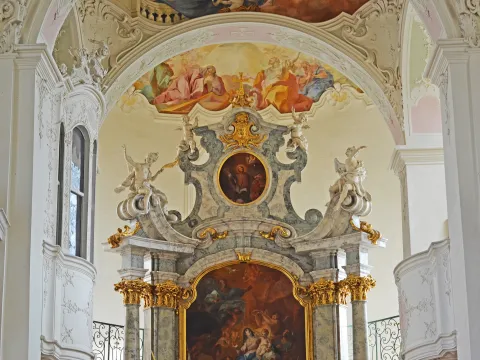
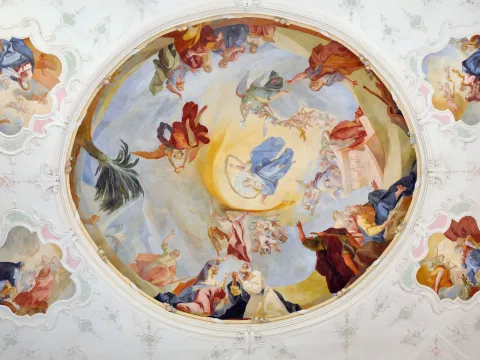
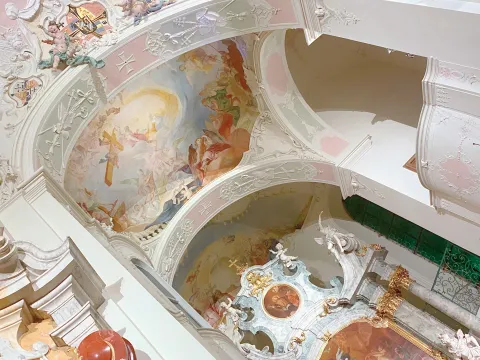
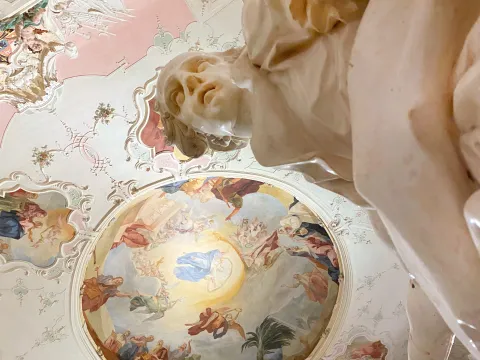
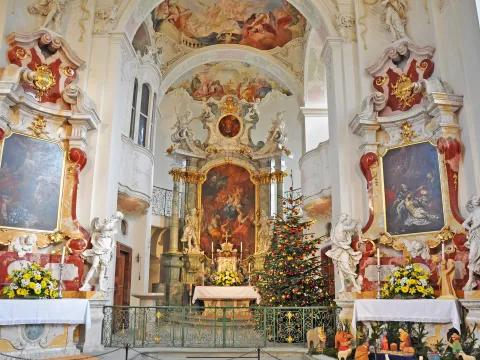
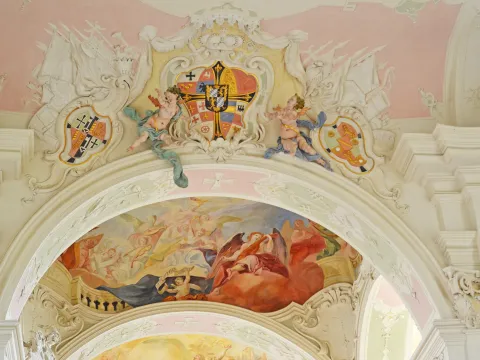
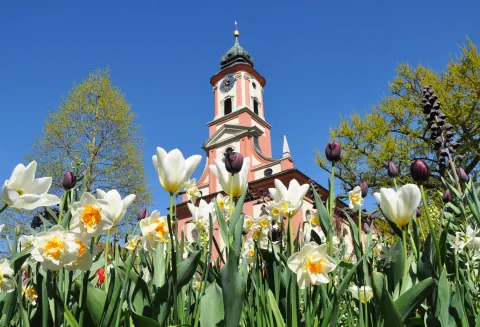
Johann Caspar Bagnato built St. Mary’s castle church between 1732 and 1739. Joseph Anton Feuchtmeyer (1696-1770), one of the most important Baroque sculptors in south-west Germany, created the church's main furnishings, including the high altar, side altars, pulpit and sculptures. Franz Joseph Spiegler painted ceiling paintings and the high altarpiece, which are dedicated to the life of Mary. The rich stucco by Francesco Pozzi is more than just decoration, it draws the eye to the essentials: the ‘heavenly area’ of the choir and the high altar. The church in its entirety is a work of art that reflects the religiosity of its time. St Mary's marked the beginning of the Baroque period on Lake Constance. The church bell of St Mary's is one of the few bells on Lake Constance that was cast before the Thirty Years' War. It was cast in Lindau in 1505, has a diameter of 54 cm and weighs 150 kg.
Above the church portal is the bust of the church's patron saint Mary. She is also the patron saint of the Teutonic Order. This lead casting by Joseph Anton Feuchtmayers is one of the few sculptures in this technique that have survived.
Johann Caspar Bagnato built St. Mary's Castle Church between 1732 and 1739. Joseph Anton Feuchtmeyer (1696-1770), one of the most important Baroque sculptors in south-west Germany, created the church's main furnishings, including the high altar, side altars, pulpit and sculptures. Franz Joseph Spiegler painted ceiling paintings and the high altarpiece, which are dedicated to the life of Mary. The rich stucco by Francesco Pozzi is more than just decoration, it draws the eye to the essentials: the ‘heavenly area’ of the choir and the high altar. The church in its entirety is a work of art that reflects the religiosity of its time. St Mary's marked the beginning of the Baroque period on Lake Constance. The church bell of St Mary's is one of the few bells on Lake Constance that was cast before the Thirty Years' War. It was cast in Lindau in 1505, has a diameter of 54 cm and weighs 150 kg.
Above the church portal is the bust of the church's patron saint Mary. She is also the patron saint of the Teutonic Order. This lead casting by Joseph Anton Feuchtmayers is one of the few sculptures in this technique that have survived.
Johann Caspar Bagnato built St. Mary's Castle Church between 1732 and 1739. Joseph Anton Feuchtmeyer (1696-1770), one of the most important Baroque sculptors in south-west Germany, created the church's main furnishings, including the high altar, side altars, pulpit and sculptures. Franz Joseph Spiegler painted ceiling paintings and the high altarpiece, which are dedicated to the life of Mary. The rich stucco by Francesco Pozzi is more than just decoration, it draws the eye to the essentials: the ‘heavenly area’ of the choir and the high altar. The church in its entirety is a work of art that reflects the religiosity of its time. St Mary's marked the beginning of the Baroque period on Lake Constance. The church bell of St Mary's is one of the few bells on Lake Constance that was cast before the Thirty Years' War. It was cast in Lindau in 1505, has a diameter of 54 cm and weighs 150 kg.
Above the church portal is the bust of the church's patron saint Mary. She is also the patron saint of the Teutonic Order. This lead casting by Joseph Anton Feuchtmayers is one of the few sculptures in this technique that have survived.